Are you planning to decorate your home with beautiful Christmas lights, but hesitating just because of high electricity bills? If yes, you are not alone.
You won’t believe it, but many homeowners in Austin can’t even upgrade their old strands because of electric bills. They often search, “Are Christmas lights expensive to run?” “Will my electric bill skyrocket?” etc.!
Actually, the truth is, the type of bulbs you choose makes a more significant difference than the number of lights. Switching to LEDs is comparatively affordable, as they consume relatively little electricity and give a festive, warm glow to your outdoors.
But still, many homeowners are not confident in using outdoor holiday lights, and they typically ask, “How much do Christmas lights cost to run?”
If you are also facing the same situation, don’t worry. Today, we are going to break down the Christmas lights’ electric cost and help you make an informed decision so you can decorate more without worrying about increased electricity bills.
How Much Do Christmas Lights Cost to Run?
As mentioned above, the biggest confusion of homeowners in Austin is,
“Are Christmas lights expensive to run? What spikes in electric bills should we expect after decorating our house with Christmas lights?”
Well, the short answer is, yes! Christmas lights are expensive to run, especially if you are using incandescent bulbs that cost $20–$100+. This means the bigger the display, the higher the bills.
So, What’s the Solution?
Electricity powers each bulb in a strand. The type of bulbs you use will determine how much electricity they use. This means the total number of strands and hours used per day will affect your total cost.
The best solution is to consider modern Christmas lights, which means LED bulbs. They are more energy-efficient and use very little electricity. Even larger displays would cost a few dollars per month.
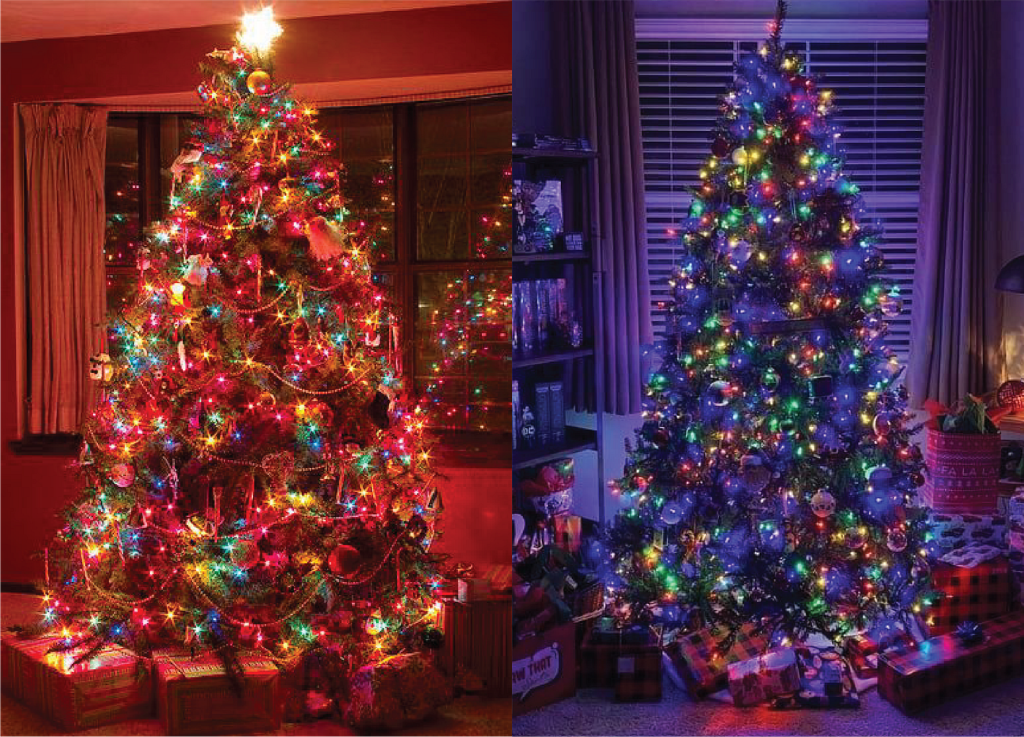
LEDs Vs. Incandescent – The Big Difference in Numbers
That’s when you see the biggest impact on your electricity bills.
LED Christmas Lights
- Use about 80–90% less electricity
- Stay cool to the touch
- Last much longer (years vs seasons)
Typical Christmas lights’ power usage is ~4-10 watts per strand (100 bulbs).
Incandescent Lights
- Traditional, warm glow
- Use significantly more energy
- Generate heat
Their typical usage is ~40-100 watts per strand (100 bulbs).
This means 1 LED strand is about 5 watts, and 1 incandescent strand is about 50 watts.
That’s a 10x difference in energy usage, which is significant.
What Does This Reduction Mean for Your Electric Bill?
Let’s find out what happens to your electric bill when you use LEDs.
Small Setup
When you use a few strands around windows or trees and lights are on just for a few hours each night, then the impact on bills is almost nothing, and you won’t even notice it.
Medium Setup
A medium setup includes a roofline, bushes, and maybe a tree or two, and when lights are on every evening, you will see a small impact on bills, which seem quite affordable.
Large Display
With full house coverage, where multiple areas are lit up and have longer run times, you might see a noticeable impact on your bill, which would still be reasonable for most households.
In short, electricity and lighting power costs will be roughly $0.10 to $0.15 per kWh.
What Impacts Your Total Costs?
Many people wonder, “Do Christmas lights use a lot of electricity?” The truth is, your electricity usage depends on three simple factors:
Number of Light Strands
More strands = more energy use
- Small setup: 5–10 strands
- Medium setup: 10–25 strands
- Large display: 30+ strands
Hours Per Day
- 4 hours → very low cost
- 6 hours → typical
- 8+ hours → higher usage
Use a timer to control this easily.
Type of Lights
This is the biggest factor:
- LED → low cost
- Incandescent → higher cost
Will Electric Lights Spike Your Electricity Bill?
Another question that sticks in many homeowners’ minds is, “Will Christmas lights spike my electricity bill?
Honestly, when you choose permanent LED lights for outdoors, your bill will be barely noticeable. But when you choose incandescent lights, the bill will definitely spike.
For most homes:
- LED decorations add $1–$10 total for the season
- Incandescent setups might add $20–$100+, depending on size
So don’t worry, your bill will not suddenly be doubled.
LED Vs. Incandescent Christmas Lights
Let’s compare them both to understand holiday lights’ electricity usage and cost:
| Features | LED lights | Incandescent lights |
| Energy usage | Very low | High |
| Cost to run | Very cheap | More expensive |
| Impact on the electric bill | Barely noticeable | Slight to noticeable increase |
| Heat output | Stay cool | Get host |
| Lifespan | Last for years | Burn out faster |
| Brightness | Bright & vibrant | Soft, warm glow |
| Overall efficiency | Highly efficient | Less efficient |
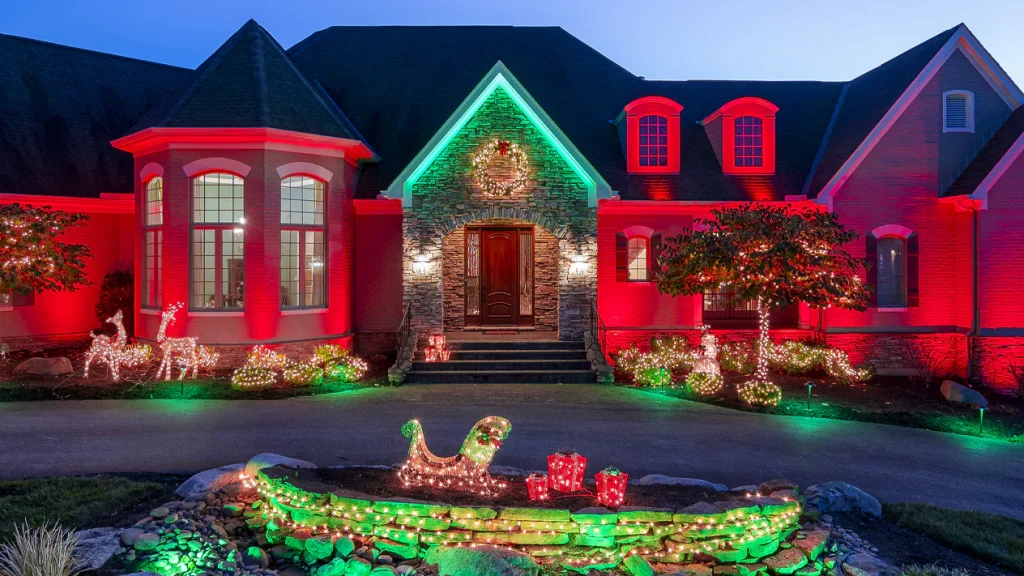
Why LEDs are the Smartest Choice
If you are not sure why you should use LEDs for exteriors, then here are a few reasons to consider outdoor lighting for holidays:
- Lower electricity cost
- Safer (less heat)
- Longer lifespan
- Brighter and more vibrant
- Better for large displays
Your bills will remain unaffected and nearly unnoticeable, regardless of whether you use medium or larger displays.
Christmas Lights Energy Use for a Real Home Setup
Let’s say you want to decorate your home with 10 strands of light and run them for 6 hours per day.
LED Setup for 10 Strands
- Total wattage: 50 watts (0.05 kW)
Daily usage:
- 0.05 × 6 = 0.3 kWh
Daily cost:
- 0.3 × $0.13 = $0.039 (~4 cents/day)
Monthly cost:
- ~$1.17
Full season (60 days):
- ~$2.34
Now, let’s discuss the cost for the incandescent setup
- Total wattage: 500 watts (0.5 kW)
Daily usage:
- 0.5 × 6 = 3 kWh
Daily cost:
- 3 × $0.13 = $0.39/day
Monthly cost:
- ~$11.70
Full season (60 days):
- ~$23.40
Is It Worth Upgrading to LED?
Yes, it is. Especially if you decorate every year, you use too many strands and want lower long-term costs.
What Do Christmas Lights Actually Give You?
Christmas lights actually give you the following:
- A warm, festive home
- A welcoming feeling for guests
- Joy for your family
- A little magic during the season
Easy Ways to Keep Costs Low
Here are some simple tips to keep your costs low:
- Use LED lights instead of incandescent bulbs
- Set timers so lights don’t stay on all night
- Limit daily run time to a few evening hours
- Focus on key areas instead of covering everything
- Avoid unnecessary extra strands
- Turn lights off when not needed or when away
Final Thoughts – Christmas Lights Wattage Use
At the end of the day, Christmas lights are far more affordable than most people expect. With modern LED options, you can decorate your home, enjoy a festive atmosphere, and create lasting memories—without worrying about a big jump in your electric bill.
A little planning goes a long way, and the small cost is easily worth the warmth and joy your home will bring throughout the season